Stop Clinic No-Shows! 7 Proven WhatsApp Strategies (2026)
Losing revenue to missed appointments? Discover 7 simple WhatsApp automation strategies to reduce patient no-shows by 40% and keep your clinic's schedule full.
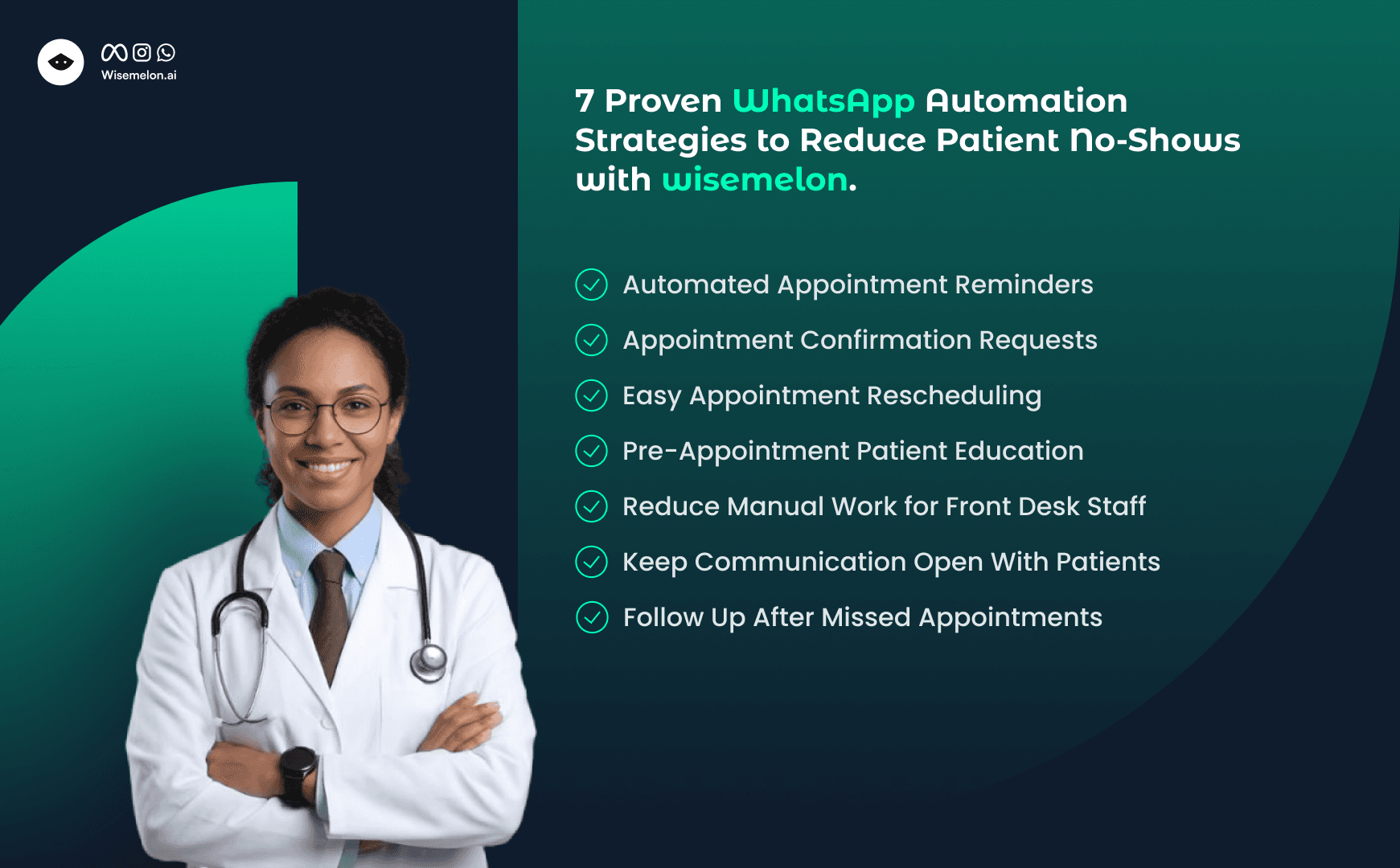
HOW HOSPITALS AND CLINICS CAN REDUCE PATIENT NO-SHOWS: 7 PROVEN STRATEGIES (2026 GUIDE)
Every hospital or clinic faces the same frustrating problem.
A patient books an appointment.
The doctor prepares.
The schedule is full.
But when the appointment time arrives - the patient doesn’t show up.
This happens far more often than most healthcare providers expect.
Research shows that 25-40% of hospital and clinic appointments result in patient no-shows, which leads to:
• Lost revenue
• Idle doctors and staff
• Disrupted schedules
• Delayed care for other patients
For many hospitals and clinics, missed appointments quietly become one of the largest operational losses.
For example:
A healthcare facility seeing 500 patients per month with a 25% no-show rate loses about 125 appointments every month.
"If the average consultation is ₹500, that's ₹62,500 in lost revenue monthly - over ₹7.5 lakhs per year."
But here’s the important part.
Patients usually don’t miss appointments intentionally.
Most no-shows happen because the communication system between the hospital and the patient is weak.
Fix the communication - and you fix the problem.
WHY TRADITIONAL REMINDER SYSTEMS FAIL
Many hospitals and clinics still rely on outdated reminder methods.
The most common approach is a manual phone call one day before the appointment.
But this system has several problems.
Phone calls are often missed because patients are busy, at work, or unable to answer unknown numbers. In many cases, patients assume the call is spam or telemarketing, so they ignore it.
Emails also perform poorly. Many patients don’t regularly check their inbox, and reminder emails often get buried under dozens of other messages.
As a result:
• The reminder never reaches the patient
• The patient forgets the appointment
• The appointment slot stays empty
Modern healthcare providers are solving this by switching to automated messaging systems that communicate with patients before their appointment.
7 PROVEN STRATEGIES TO REDUCE PATIENT NO-SHOWS
Hospitals and clinics that successfully reduce no-shows usually implement a combination of communication and automation strategies.
Here are seven proven methods used by healthcare providers today.
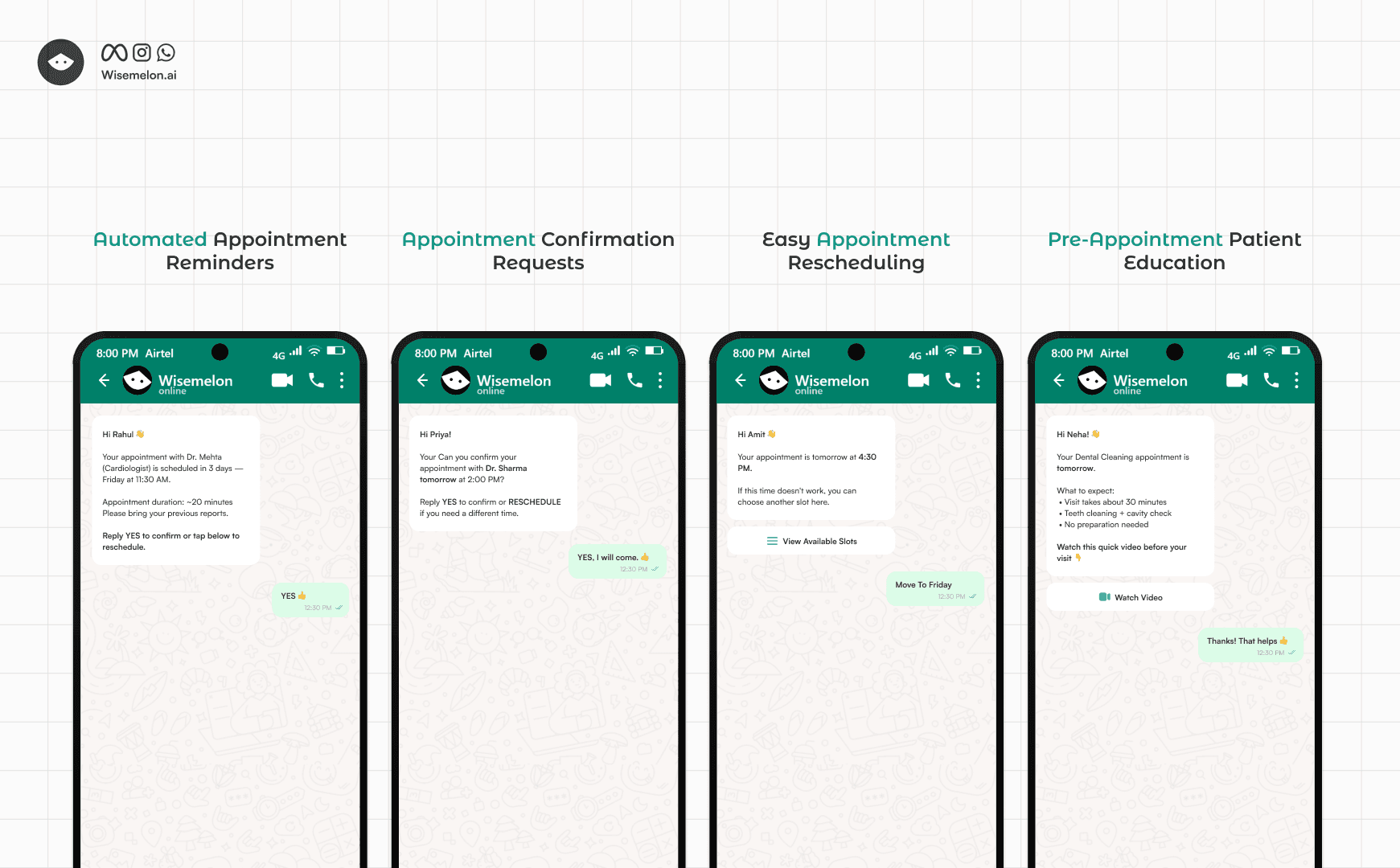
AUTOMATED APPOINTMENT REMINDERS
The most effective way hospitals and clinics reduce patient no-shows is by sending automated appointment reminders before the visit.
Instead of relying on a single reminder call, hospitals and clinics use a structured reminder sequence that keeps patients informed throughout the days leading up to their appointment.
This creates a simple patient reminder journey that keeps the appointment top of mind.
EXAMPLE PATIENT REMINDER FLOW
3 DAYS BEFORE APPOINTMENT - PREPARE THE PATIENT
Hi Sarah! Your dental cleaning appointment is in 3 days.
Here’s what to expect during your visit:
✓ Appointment takes about 30 minutes
✓ We’ll clean your teeth and check for cavities
✓ Please bring your insurance card
✓ No preparation required
Watch this short video to learn what a dental cleaning feels like:
[What Dental Cleaning Feels Like]
1 DAY BEFORE APPOINTMENT - SEND A CLEAR REMINDER
Hi Sarah 👋
Just a reminder that you have an appointment with Dr. Smith tomorrow at 2:00 PM at our clinic.
Please arrive 10 minutes early and bring your insurance card.
If you need to reschedule, you can do it here:
[Reschedule Link]
2 HOURS BEFORE APPOINTMENT - FINAL REMINDER
Hi Sarah!
Looking forward to seeing you today at 2 PM.
Our clinic address is:
[Address]
Need directions?
[Get Directions]
Sending reminders in this structured sequence ensures that patients:
• Remember their appointment
• Feel prepared for the visit
• Have time to reschedule if needed
Hospitals and clinics that implement automated reminders often see 30–40% fewer patient no-shows.
APPOINTMENT CONFIRMATION REQUESTS
Another effective strategy is asking patients to confirm their appointment before the visit.
Instead of only sending reminders, hospitals and clinics send a message asking patients to confirm attendance.
Example message:
Hi Sarah!
Can you confirm your appointment with Dr. Smith tomorrow at 2 PM?
Reply YES to confirm.
If you need to change the time, you can reschedule here:
[Reschedule Link]
This simple step helps healthcare providers identify uncertain appointments early and reduce last-minute cancellations.
EASY APPOINTMENT RESCHEDULING
Sometimes patients miss appointments simply because rescheduling is difficult.
If patients must call the hospital to change their appointment, many delay the process or skip it entirely.
Providing a one-click reschedule option in reminder messages makes the process easier.
Patients can quickly select a new appointment time without needing to call the front desk.
This keeps appointment slots filled and improves patient satisfaction.
PRE-APPOINTMENT PATIENT EDUCATION
Patients are more likely to attend their appointment when they understand what will happen during the visit.
Hospitals and clinics can send short educational messages before appointments explaining:
• What to expect during the visit
• How long the appointment will take
• What patients should bring
• Any preparation needed
This reduces patient anxiety and increases appointment attendance.
REDUCE MANUAL WORK FOR FRONT DESK STAFF
Front desk teams often spend hours calling patients to remind them about appointments.
Manual reminders are time-consuming and inconsistent.
Automation allows hospitals and clinics to send reminders automatically without staff needing to manually call every patient.
This saves time and allows staff to focus on patient care.
KEEP COMMUNICATION OPEN WITH PATIENTS
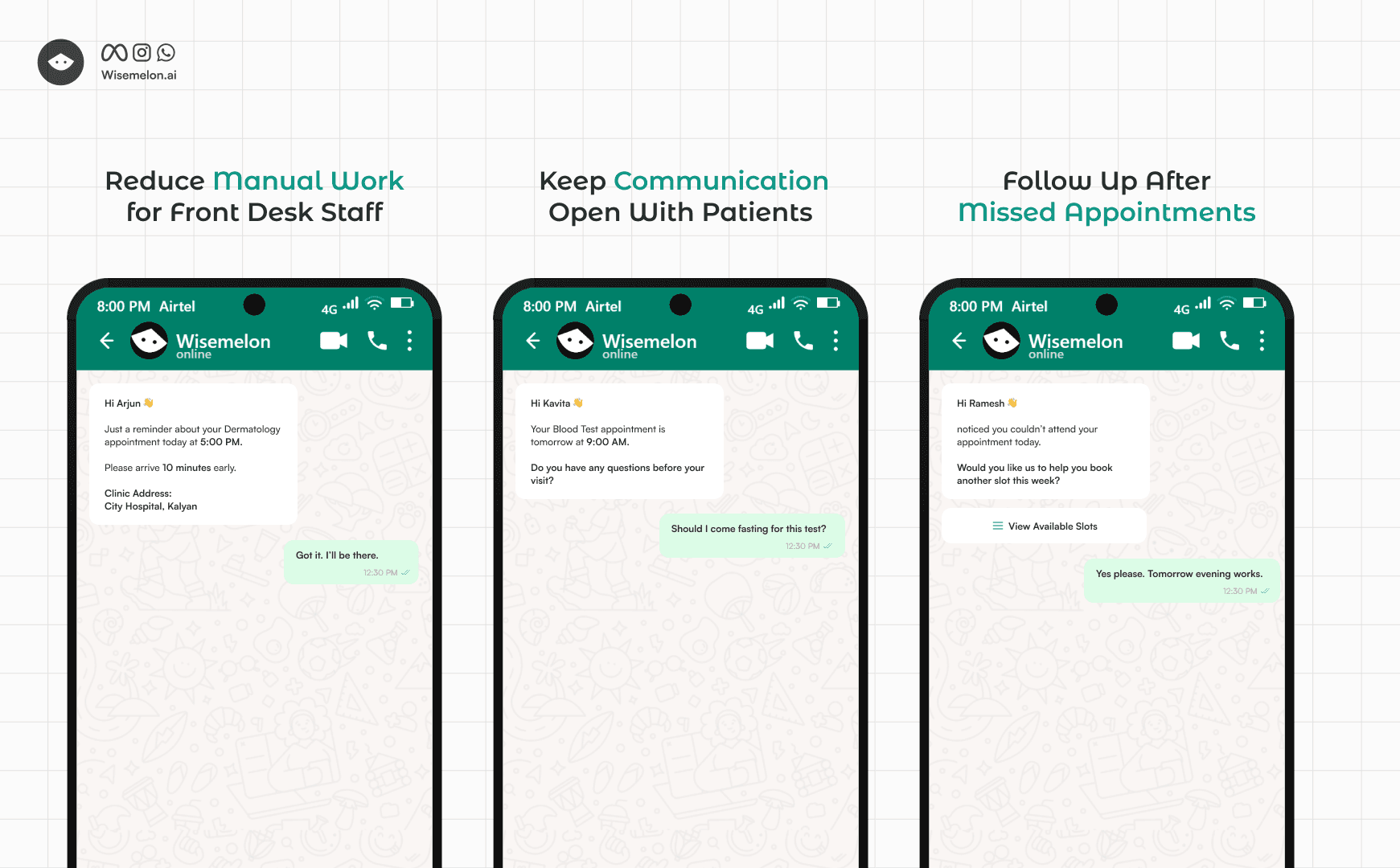
Messaging reminders also allow patients to respond directly to the hospital or clinic.
Patients can ask questions like:
• “Do I need to bring previous reports?”
• “Should I arrive early for this test?”
• “Can I shift my appointment to tomorrow?”
This real-time communication improves the patient experience and helps prevent missed appointments.
FOLLOW UP AFTER MISSED APPOINTMENTS
Even with good reminder systems, some patients will still miss their appointment.
A quick follow-up message can help recover these visits.
Example message:
Hi Sarah, we noticed you couldn’t attend your appointment today.
Would you like us to help you reschedule?
Many patients respond positively to these follow-ups and book another appointment.
HOW HOSPITALS AND CLINICS AUTOMATE THIS PROCESS
Sending reminders manually for every patient is not practical for busy healthcare providers.
This is why many hospitals and clinics now use automation platforms that connect with their appointment system.
These platforms automatically send:
• Appointment reminders
• Confirmation requests
• Preparation instructions
• Reschedule links
• Follow-up messages
Automation ensures every patient receives timely reminders without increasing workload for hospital or clinic staff.
Platforms like Wisemelon help healthcare providers build automated communication workflows so reminders are sent at the right time, every time.
THE REAL IMPACT OF REDUCING PATIENT NO-SHOWS
Reducing patient no-shows has a direct impact on hospital and clinic revenue.
For example:
If a hospital sees 500 patients per month with a 25% no-show rate, it loses 125 appointments monthly.
If the average consultation value is ₹500, that equals ₹62,500 in lost revenue each month.
Reducing the no-show rate to 15% could recover:
• ₹25,000 in monthly revenue
• ₹3,00,000 per year
And that doesn’t include the benefits of improved efficiency and better patient care.
THE BOTTOM LINE
Patient no-shows are not just a scheduling issue - they are a communication problem.
Hospitals and clinics that improve how they communicate with patients before appointments see dramatic improvements in attendance.
By using automated reminders, confirmations, and easy rescheduling, healthcare providers can reduce missed appointments by 30–40% or more.
For many hospitals and clinics, this means recovering thousands of dollars in lost revenue every month.
WANT TO REDUCE PATIENT NO-SHOWS?
Wisemelon helps hospitals and clinics automate appointment reminders and patient communication using WhatsApp.
Healthcare providers can set up automated reminder workflows in minutes and ensure every patient receives timely reminders before their appointment.
Book a demo to see how Wisemelon helps reduce patient no-shows and improve patient engagement.
Newsletter
Enjoyed this read? Subscribe.
Discover design insights, project updates, and tips to elevate your work straight to your inbox.
Unsubscribe at any time
Updated on