WhatsApp for Hospitals: Patient Communication Guide 2026

Written By
Teja
Discover 10 ways hospitals can use WhatsApp to improve patient communication, automate appointments, reduce no-shows, manage follow-ups and connect patient journeys.

WhatsApp for Hospitals: 10 Ways to Improve Patient Communication in 2026
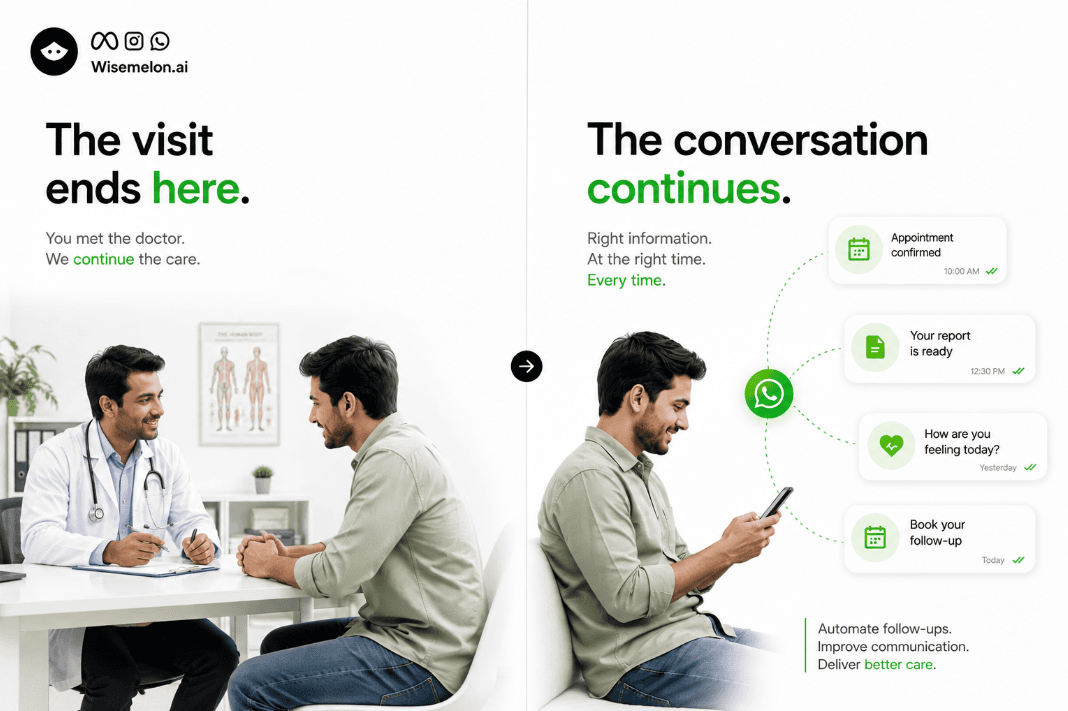
Patients don't want every interaction with a hospital to involve a phone call.
They want to book appointments, receive reminders, ask simple questions, get updates and follow up with the hospital through channels they already use.
That's why WhatsApp is becoming an increasingly important communication channel for hospitals and healthcare organizations.
In India, the shift is already visible. Hospitals and public healthcare institutions are using WhatsApp to make routine services easier to access, while Meta continues to expand WhatsApp Business capabilities for customer communication and support.
For hospitals, the opportunity isn't simply to "send WhatsApp messages."
It's to build a better patient communication journey.
Here are 10 practical ways hospitals can use WhatsApp in 2026.
1. Make Appointment Booking Easier
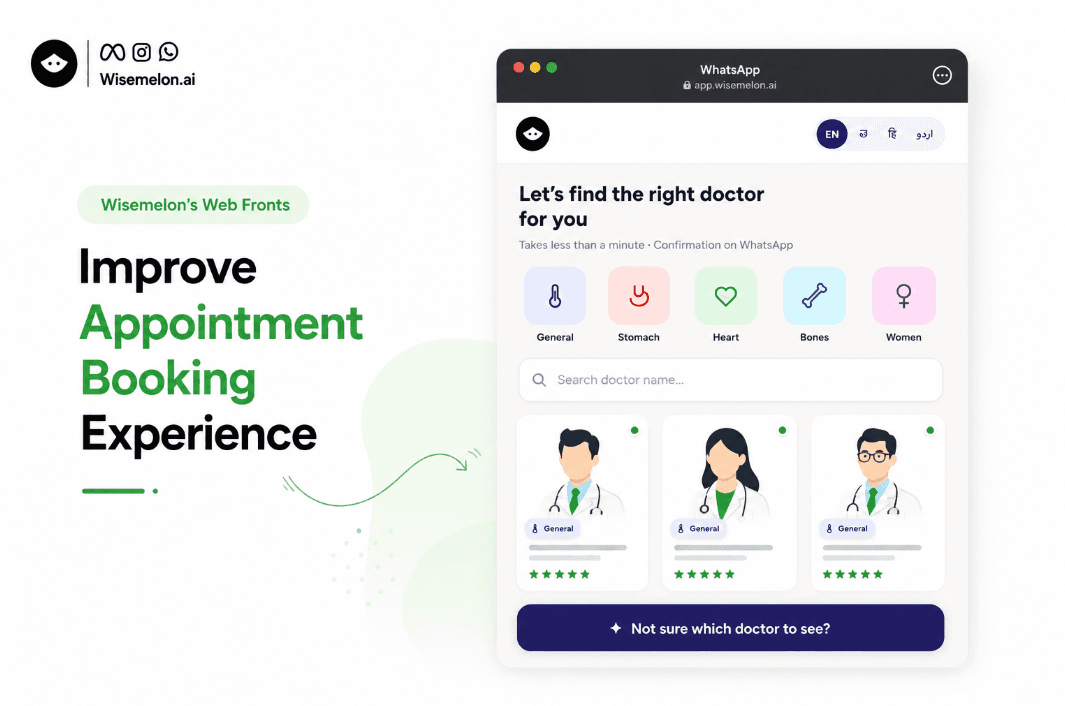
Appointment booking is one of the most natural use cases for WhatsApp.
Instead of asking patients to:
Call the hospital
↓
Wait for a receptionist
↓
Explain their requirement
↓
Check availability
↓
Confirm the appointment
the process can begin directly in WhatsApp.
For example:
Book an Appointment
→ Select department
→ Select doctor
→ Select date
→ Select available time
→ Confirm appointment
WhatsApp Flows and structured chat experiences can make these interactions easier without forcing patients to leave the conversation.
The goal isn't to replace every hospital booking system.
It's to make accessing that system easier.
2. Reduce Appointment No-Shows With Reminders
A booked appointment doesn't guarantee that the patient will arrive.
Patients forget appointments, confuse timings or simply miss reminders.
WhatsApp can be used to send timely appointment confirmations and reminders.
For example:
Appointment confirmed
↓
Reminder before the appointment
↓
Final reminder
↓
Patient confirms, reschedules or cancels
This gives the hospital an opportunity to identify changes earlier instead of discovering an empty appointment slot at the last minute.
Appointment reminders are also one of the most commonly discussed WhatsApp healthcare use cases because they solve a very specific operational problem: missed appointments.
3. Let Patients Reschedule Without Calling
A reminder becomes much more useful when the patient can actually do something with it.
Instead of:
"Your appointment is tomorrow at 10:00 AM."
the message can provide options such as:
Confirm
Reschedule
Cancel
If the patient selects "Reschedule," the workflow can guide them through available options.
This reduces unnecessary calls and gives the hospital earlier visibility into appointment changes.
4. Automate Common Patient Questions
Hospital teams receive many repetitive questions every day.
For example:
What are the visiting hours?
Where is the hospital located?
How do I book an appointment?
What documents should I bring?
Where can I find the billing department?
How can I contact a particular department?
What are the available services?
These don't always require a staff member to manually answer every conversation.
A WhatsApp automation or AI-assisted system can handle common questions and route more complex requests to the appropriate team.
The important distinction is that automation should handle administrative and predictable questions, while clinical or sensitive situations should have an appropriate human escalation path.
5. Send Important Patient Updates
WhatsApp can also be used to communicate operational updates.
For example:
Appointment confirmations
Appointment changes
Billing updates
Service notifications
Report-ready notifications
Admission-related updates
Follow-up reminders
The message should contain only the information necessary for the communication.
For sensitive information, hospitals should use appropriate security controls and, where necessary, direct patients to a secure authenticated system rather than putting sensitive medical information directly into a chat message.
6. Improve Post-Visit Follow-Ups
Patient communication shouldn't stop when the appointment ends.
A hospital can create structured follow-up journeys around appropriate administrative and care-coordination needs.
For example:
Visit completed
↓
Follow-up reminder
↓
Next appointment reminder
↓
Patient feedback
↓
Return visit
Instead of relying on staff to remember every follow-up manually, automated workflows can trigger communication at the appropriate stage.
This is particularly useful when hospitals have large patient volumes.
7. Keep Patients Updated About Reports
Patients frequently contact hospitals simply to ask:
"Is my report ready?"
Instead of requiring the patient to call, the hospital can send a notification when the report becomes available.
For example:
"Your report is now available. Please access it through your secure patient portal."
This approach can reduce repetitive calls while keeping sensitive information out of an ordinary chat message.
Hospitals should decide what can safely be communicated through WhatsApp and what should remain inside a secure authenticated system.
8. Use WhatsApp for Patient Feedback
A patient's experience doesn't end at the reception desk.
Hospitals can use WhatsApp to collect feedback after relevant interactions.
For example:
How was your experience today?
⭐ ⭐ ⭐ ⭐ ⭐
Or:
What could we improve?
The important part is what happens next.
Feedback shouldn't simply disappear into a spreadsheet.
Hospitals can route negative feedback to the appropriate team and use positive feedback to understand what's working.
9. Build Automated Patient Communication Journeys
One of the biggest advantages of using WhatsApp Business Platform rather than relying only on manual messaging is the ability to connect communication to a larger workflow.
For example:
Appointment booked
↓
Confirmation
↓
Reminder
↓
Patient arrives
↓
Post-visit communication
↓
Follow-up reminder
↓
Feedback
This turns WhatsApp into part of the patient's communication journey rather than just another notification channel.
Hospitals can also identify where patients stop responding and improve those parts of the journey.
10. Connect WhatsApp With Hospital Systems
WhatsApp becomes much more useful when it isn't operating as a disconnected inbox.
A hospital may already have:
Hospital Management System
CRM
Appointment system
Billing system
Patient portal
Call center
Marketing platform
Connecting WhatsApp with these systems allows communication to be triggered by actual events.
For example:
Appointment created in hospital system
↓
WhatsApp confirmation
Or:
Appointment approaching
↓
WhatsApp reminder
Or:
Report becomes available
↓
WhatsApp notification
This reduces manual work and keeps communication connected to the hospital's existing processes.
WhatsApp Automation vs Human Communication
Automation doesn't mean hospitals should remove people from patient communication.
It means staff shouldn't have to manually perform every repetitive task.
A practical model is:
Automation
For predictable workflows.
↓
AI
For common conversational questions where appropriate.
↓
Human agent
For complex, sensitive or exceptional situations.
This creates a better balance between speed and human support.
Meta has also expanded AI and calling capabilities for businesses in India, including Business AI for eligible businesses and calling capabilities on the WhatsApp Business Platform.
WhatsApp Business App vs Official WhatsApp Business Platform for Hospitals
A small clinic with a few conversations may be able to manage WhatsApp manually.
A hospital handling hundreds or thousands of patient interactions is a different situation.
The WhatsApp Business Platform is designed for businesses that need programmatic access and larger-scale customer communication.
With an official WhatsApp Business API platform, hospitals can build workflows around:
Appointment automation
Patient communication
Team inboxes
Customer journeys
CRM integration
Analytics
Automated follow-ups
AI-assisted conversations
This is where an official WhatsApp Business API platform like Wisemelon can fit naturally into the hospital's communication infrastructure—connecting WhatsApp conversations with automation, teams, customer journeys and analytics rather than treating WhatsApp as a standalone phone.
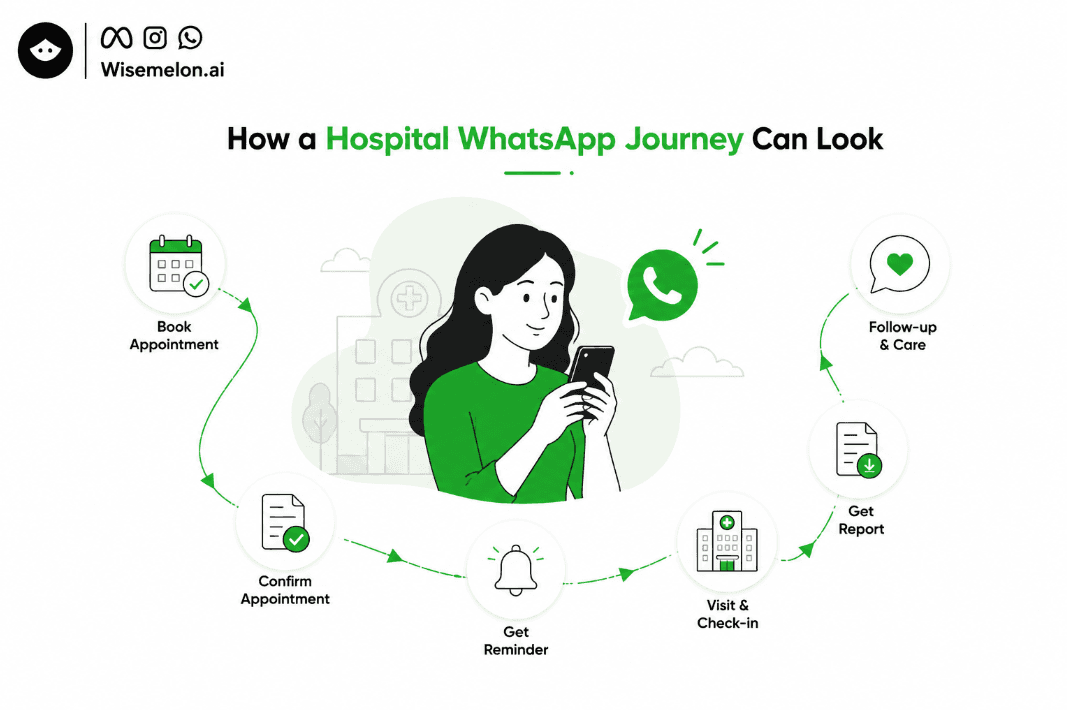
How a Hospital WhatsApp Journey Can Look
A well-designed journey might look like:
Patient discovers hospital
↓
Clicks to WhatsApp
↓
Chooses department
↓
Books appointment
↓
Receives confirmation
↓
Gets reminder
↓
Arrives for appointment
↓
Receives appropriate follow-up
↓
Gets report-ready notification
↓
Books next appointment
↓
Provides feedback
WhatsApp becomes the communication layer connecting different stages of the journey.
The Goal Isn't More WhatsApp Messages
Hospitals shouldn't measure success simply by asking:
"How many WhatsApp messages did we send?"
Better questions are:
Did appointment bookings become easier?
Did no-shows decrease?
Did patients get faster responses?
Did call-center workload decrease?
Did follow-ups improve?
Did patients receive timely updates?
Where are patients dropping out of communication journeys?
Are staff spending less time on repetitive tasks?
The value comes from improving the patient experience and hospital operations—not from increasing message volume.
Final Thoughts
WhatsApp can become much more than a messaging channel for hospitals.
Used correctly, it can connect appointment booking, reminders, patient queries, updates, follow-ups, feedback and internal workflows into one communication journey.
The strongest hospital WhatsApp strategy is:
Make communication easier
↓
Automate repetitive work
↓
Keep humans involved where they matter
↓
Protect patient information
↓
Measure the journey
In 2026, the question for hospitals isn't whether they should "use WhatsApp."
It's:
Which parts of the patient communication journey should WhatsApp make easier?
Frequently Asked Questions
How can hospitals use WhatsApp?
Hospitals can use WhatsApp for appointment booking, confirmations, reminders, rescheduling, common questions, operational updates, report-ready notifications, follow-ups, feedback and other appropriate patient communication workflows.
Can WhatsApp reduce hospital appointment no-shows?
WhatsApp reminders can help hospitals communicate appointment details and give patients an opportunity to confirm, reschedule or cancel. The actual impact depends on the hospital's workflow, timing and patient engagement.
Can hospitals automate WhatsApp messages?
Yes. Hospitals can use the WhatsApp Business Platform with an appropriate business messaging solution to automate eligible workflows such as appointment reminders, confirmations, follow-ups and notifications.
Can hospitals use AI on WhatsApp?
AI can assist with common questions, information requests and other appropriate conversations. However, healthcare organizations should maintain human escalation for clinical, sensitive or complex situations.
Can hospitals send medical reports through WhatsApp?
Hospitals should assess the sensitivity of the information, applicable regulations and their security controls before sending medical information through WhatsApp. For sensitive documents, a secure authenticated portal or link may be more appropriate than placing the information directly in a chat.
Is WhatsApp Business App enough for a hospital?
For a small clinic with limited conversations, the Business App may be sufficient for basic manual communication. Larger hospitals generally need the WhatsApp Business Platform when they require automation, multiple teams, integrations, customer journeys and analytics.
How can WhatsApp integrate with hospital software?
The WhatsApp Business Platform can be connected to business systems such as appointment scheduling, CRM and other hospital software so that relevant communication can be triggered by events in those systems.
Should hospitals use unofficial WhatsApp APIs?
Hospitals should avoid building critical patient communication workflows around unofficial APIs or unsupported WhatsApp automation tools. An official WhatsApp Business Platform setup provides a more appropriate foundation for scalable business communication.
How can hospitals improve patient communication with WhatsApp?
Start with high-volume, predictable communication such as appointment confirmations, reminders, rescheduling, common questions and follow-ups. Then connect those workflows to hospital systems, measure where patients drop off and add human escalation for situations that require staff involvement.
Newsletter
Enjoyed this read? Subscribe.
Discover design insights, project updates, and tips to elevate your work straight to your inbox.
Unsubscribe at any time
Written By
Teja
Updated on